











 Contact
 Access Map


Research group led by Assistant Professor Sadahisa Yagi confirms the invasion of the invasive lemon pest Prays nephelomima in Japan
New invasive pest risk for lemon production in Japan
Points
- Prays nephelomima (citrus flower moth) was recorded for the first time in Japan from Chichi-jima Island in the Ogasawara Islands, Tsushima Island, Okinawa-jima Island, and Iriomote-jima Island.
- Larval feeding damage to flower buds, young fruits, and leaves was confirmed on Kikuchi lemons cultivated on Chichi-jima Island. DNA barcode analysis also suggests that Australia is the most plausible region of origin for this species.
- The species may spread to lemon-producing areas on the Japanese mainland through the movement of nursery stock. Continued monitoring is therefore needed to detect its establishment and further expansion.
Abstract
Recent growth in global trade and transportation has increased the risk of the introduction and establishment of invasive insect pests that damage agricultural crops. In particular, the movement of plants such as nursery stock can unintentionally transport small insects and their eggs.
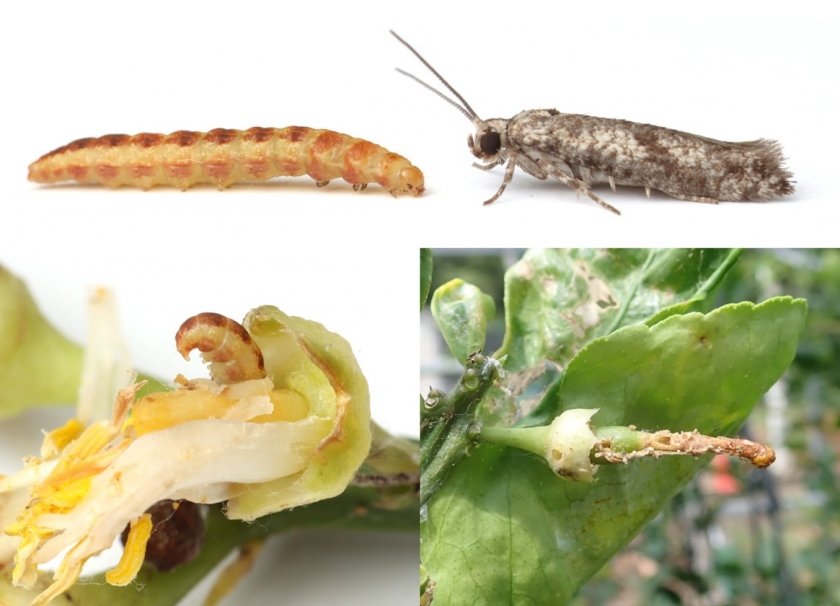
A research group led by Mr. Taiyo Oka, a doctoral student at the Graduate School of Bioresource and Bioenvironmental Sciences, Kyushu University, and Assistant Professor Sadahisa Yagi of the Faculty of Agriculture, Kyushu University, examined unidentified moth specimens belonging to the family Praydidae that had been collected from various regions of Japan using morphological observations and DNA analyses. As a result, Prays nephelomima (Japanese name: Lemon-Nisesuga), whose larvae feed on lemon flower buds and young fruits, was discovered from specimens collected on Chichi-jima Island, Tsushima Island, Okinawa-jima Island, and Iriomote-jima Island. This represents the first record of the species in Japan.
The researchers also confirmed larval feeding damage to flower buds, young fruits, and leaves of Kikuchi lemons, which are cultivated on Chichi-jima Island and marketed as "Ogasawara Lemon." In addition, an examination of DNA data and publicly available data from overseas populations suggested that Australia is the most plausible region of origin for this species.
At present, the species has not yet been recorded from mainland Japan. However, the movement of infested nursery stock could facilitate its spread to lemon-producing regions on the Japanese mainland. Continued monitoring is therefore required.
These findings were published in the international scientific journal Applied Entomology and Zoology at 10:00 a.m. (JST) on August 20, 2026.
Researcher's Comment
Prays nephelomima is a very small moth, measuring only about 1 cm across when its wings are fully spread. However, it can be a troublesome pest to detect and manage because its larvae bore into lemon flowers and young fruits, where they can cause damage without being easily noticed.
In this study, we combined field surveys conducted across Japan with information from museum specimens, published literature, and DNA analyses. By bringing these different sources of evidence together, we were able to reveal both the current distribution of this invasive species in Japan and the damage it causes to lemons.
Even records of tiny insects can become valuable information for protecting agriculture and biodiversity when accumulated over time. How are lemon trees in your area doing? I would be delighted if this study encourages you to take a closer look at the lemon trees around you.
(Taiyo Oka)
Publication Information
Journal: Applied Entomology and Zoology
Title: Invasive citrus flower moth, Prays nephelomima (Lepidoptera: Praydidae) in Japan: illustrated morphology, invasion pathways, and feeding damage on lemons
Authors: Taiyo Oka, Sadahisa Yagi
DOI: 10.1007/s13355-026-00986-4
- For more details on this research, click here.
For Research-related inquiries