











 Contact
 Access Map


[Topics] Project Involving Professor Emeritus Mitsuyasu Yabe Receives the Global Environment Awards (Minister of Agriculture, Forestry and Fisheries Award)
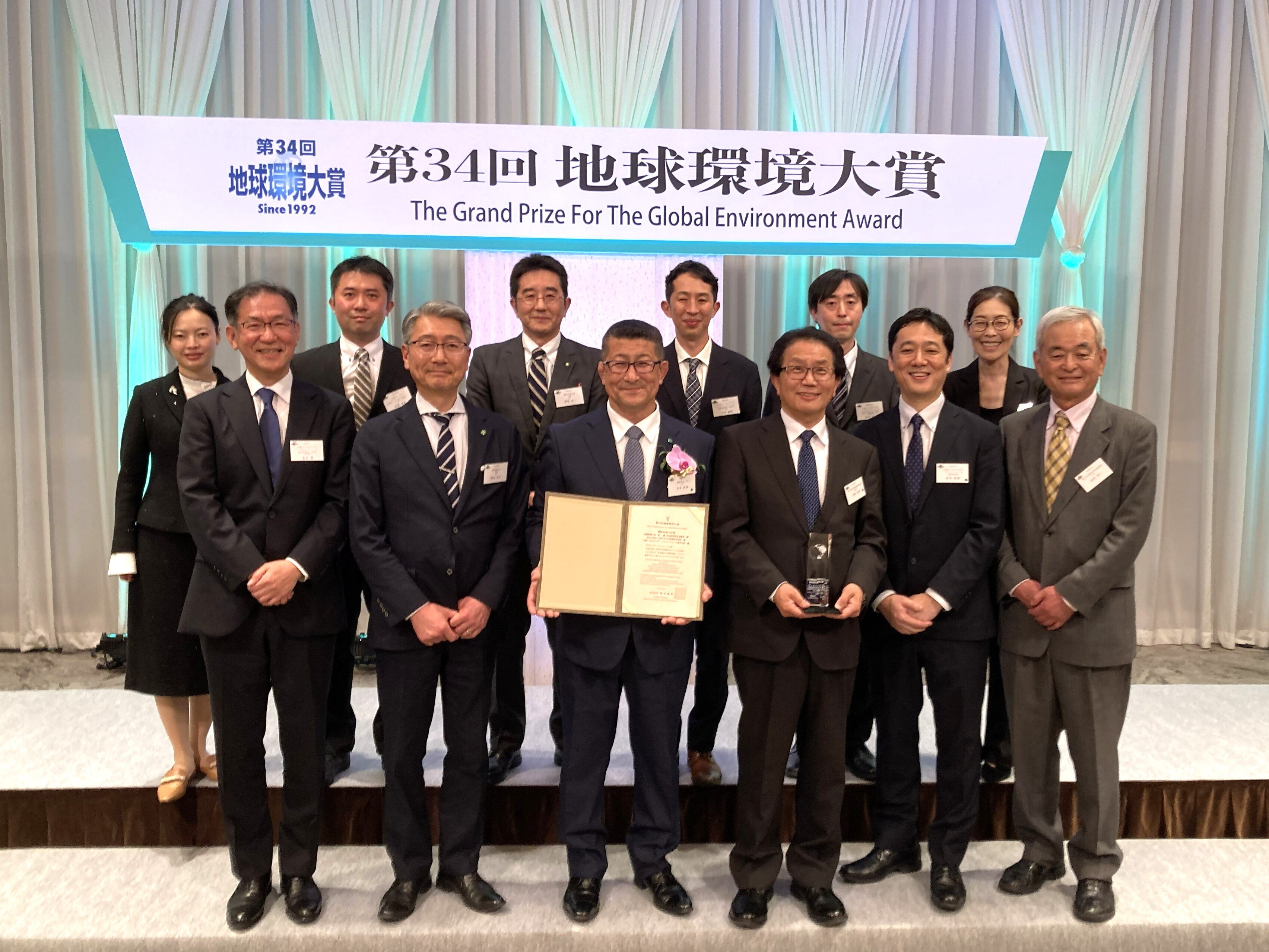
Professor Emeritus Mitsuyasu Yabe Honored with the Global Environment Award
Professor Emeritus Mitsuyasu Yabe has received the Global Environment Award (Minister of Agriculture, Forestry and Fisheries Award) in recognition of his pioneering contributions to the advanced utilization of organic waste resources and the promotion of a circular society.
About the Global Environment Award
Established in 1992, the Global Environment Award recognizes companies, organizations, and individuals whose outstanding achievements contribute to harmonizing industrial development with environmental protection. The award also honors efforts that address climate change and support the achievement of the Sustainable Development Goals (SDGs).
Reason for the Award
Since 1994, approximately 13,000 tons annually of night soil and septic tank sludge in Chikujo Town have been treated through high-temperature aerobic fermentation and converted into liquid fertilizer for agricultural use. This fertilizer has been utilized primarily in rice and wheat cultivation across more than 200 hectares of farmland.
However, because conventional liquid fertilizer contained fine suspended solids, its use had been limited in greenhouse horticulture systems employing drip irrigation and other precision fertigation equipment.
To overcome this challenge, Professor Emeritus Yabe developed an innovative concentrated bio-liquid fertilizer technology. The technology was introduced in 2020, leading to the establishment of Japan's first production facility for concentrated bio-liquid fertilizer.
This process simultaneously removes residual solids while concentrating fertilizer components by approximately twentyfold, thereby enabling practical use in greenhouse horticulture, including strawberry production. Commercial sales of the product commenced in 2024.
Whereas conventional waste-derived liquid fertilizers were mainly applied to open-field agriculture, this innovation has significantly expanded their applicability to greenhouse cultivation, plant factories, and other advanced agricultural systems.
This highly original initiative was recognized as an outstanding contribution to the value-added utilization of organic resources and the realization of a circular economy.
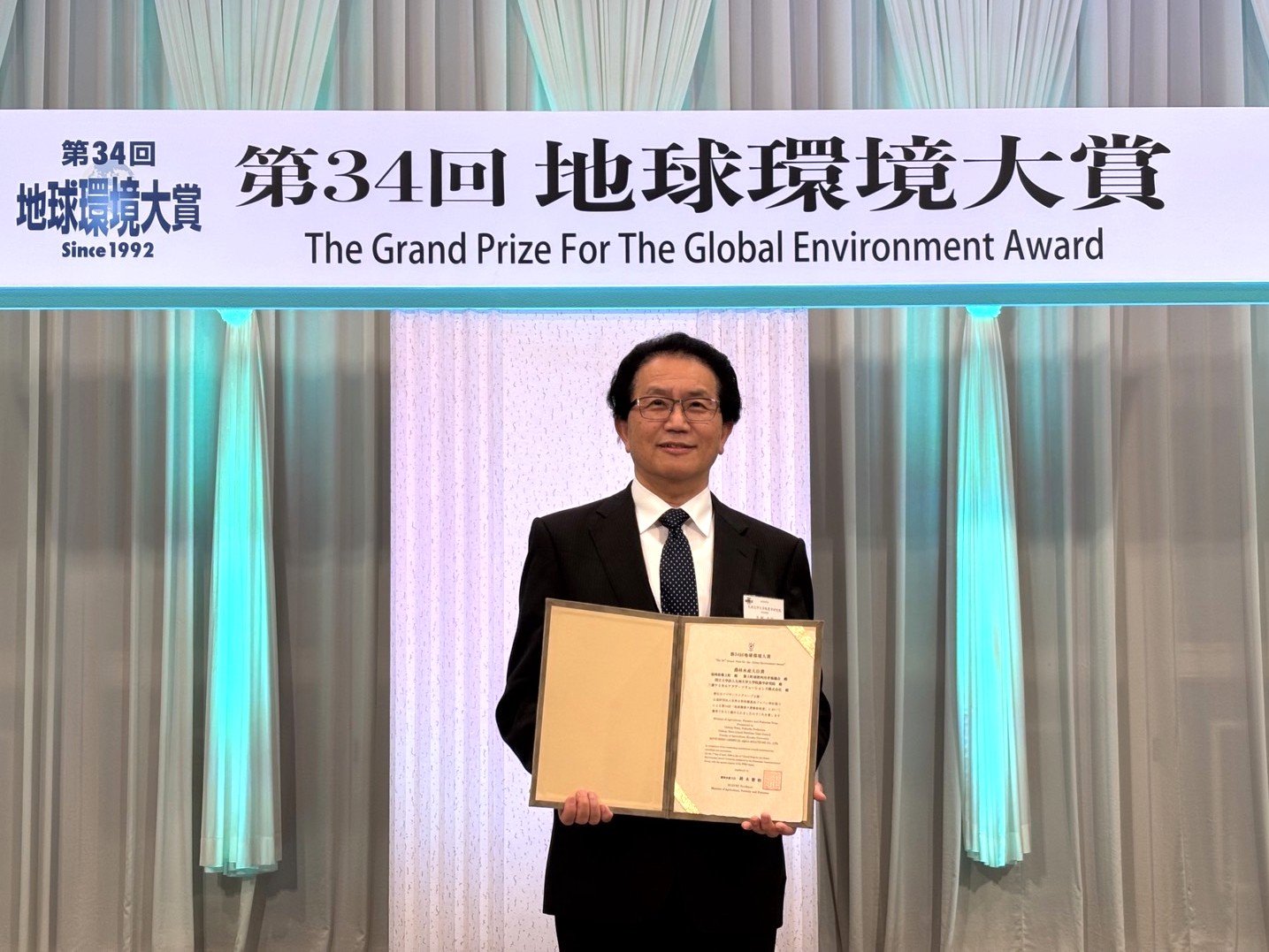
Message from Professor Emeritus Yabe
Japan depends heavily on imported raw materials for chemical fertilizers, leaving its agricultural sector vulnerable to fluctuations in global markets and international circumstances.
Under these conditions, I believe that promoting domestic resource circulation through liquid fertilizers derived from organic waste is one of the most important challenges facing the future of agriculture.
Composting has long been a common method of recycling organic waste. However, methane fermentation offers the additional advantage of generating renewable energy while simultaneously producing liquid fertilizer.
Furthermore, when combined with concentrated liquid fertilizer technology, the potential uses of digestate can be greatly expanded, creating new opportunities in greenhouse horticulture and other advanced cultivation systems.
I sincerely hope that this technology will further promote the effective use of organic resources and contribute to the realization of sustainable agriculture.
Encouraged by this award, I remain committed to steadily advancing its social implementation.
In addition, on April 1, 2026, we established Biosty Inc., a startup originating from Kyushu University. Through the broader dissemination of this technology, we aspire to contribute to the sustainable circulation of organic resources.
For Research-related inquiries
- Professor Emeritus Mitsuyasu Yabe
Mail:yabe★agr.kyushu-u.ac.jp
Please replace ★ with @ in the email address - Global Environment Award website:
The recipients of the 34th Global Environment Award were announced in March 2026.